On this day in..........

67,621 Views | 587 Replies | Last: 4 hrs ago by KentK93
jkag89
How long do you want to ignore this user?


Quote:

193 years ago today, Dec. 2, 1832, is an auspicious date in Texas history because it was on that date that Sam Houston crossed the Red River at Jonesborough and entered Texas for the first time. He could never, EVER have imagined all that would ensue as a result of that decision ---- from the 4th largest city (named for him) in the nation and his name being uttered on the moon to the hare-brained research I do here at Traces of Texas. He came here ostensibly to make a report re: Texas for President Andrew Jackson, but I think he had many different motives.

There is an apocryphal story that, as he was traveling through Arkansas, he was gifted a razor. Sam said something to the effect that he would accept the gift and that, "mark my words, this blade will one day shave the chin of the President of a republic."

But, yeah .... 193 years ago. He supposedly swam his horse across the river but it's more likely that, it being December, he took a ferry.


nortex97
How long do you want to ignore this user?
AG
1932 German-born Swiss physicist Albert Einstein is granted an American visa. A year later, he's here for good.
Cinco Ranch Aggie
How long do you want to ignore this user?
AG
12/7/1941 - Japanese aircraft attacked the US Naval base at Pearl Harbor, killing 2403 Americans including some civilians, and wounding 1178. Five of the eight battleships berthed at Ford Island were either sunk or severely damaged, with 10 other vessels also suffering severe damage or being sunk outright. More than 200 aircraft were destroyed, most of which were still on the ground.

https://texags.com/forums/16/topics/3583035
Gunny456
How long do you want to ignore this user?
AG
Here.
nortex97
How long do you want to ignore this user?
AG
1991 The leaders of Russia, Belarus and Ukraine sign an agreement dissolving the Soviet Union and establishing the Commonwealth of Independent States,
2009 Bombings in Baghdad, Iraq, kill 127 people and injure 448 others.
2010 With the second launch of the Falcon 9 and the first launch of the Dragon, SpaceX becomes the first private company to successfully launch, orbit and recover a spacecraft.
Cinco Ranch Aggie
How long do you want to ignore this user?
AG
12/8/1941 the natural follow-up to yesterday's news

ABATTBQ87
How long do you want to ignore this user?
AG


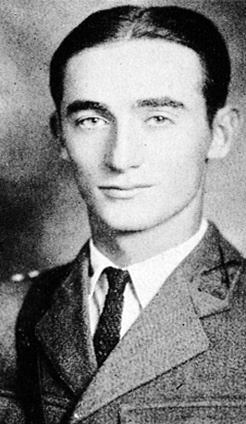
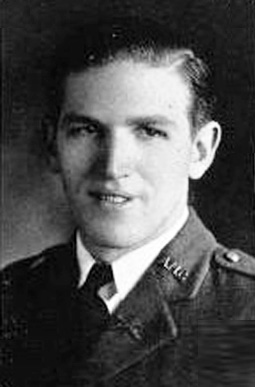
Arthur Edward Gary attended Texas A&M with the class of 1940. On 8 December 1941 he was with the 19th Bomber Group, Heavy, 30th Bomber Squadron of the U. S. Army Air Corps when he was killed in action defending Clark Field in the Philippines from Japanese attacks. This came soon after the the attack on Pearl Harbor.


Major Clarence R Davis attended A&M College of Texas with the class of 1927, with a degree in civil engineering. Before the war, Major Davis was with the Magnolia Petroleum Company and volunteered as a reserve officer at the outset of the draft. He was sent to the Philippines in October 1941. On 8 December 1941 he was with the 9th Bomber Group, 7th Material Squadron, 19th Bombardment Squadron of the U. S. Army Air Corps when he was killed in action defending Clark Field in the Philippines from Japanese attacks. This came soon after the the attack on Pearl Harbor.

Davis-Gary Hall, constructed at Texas A&M in 1942, is named after Major Clarence Reid Davis and 2nd Lt Arthur Edward Gary. These 2 men were the first Aggies killed in the war. The Board of Directors named the hall after both men since it could not be determined which of the men died first.
nortex97
How long do you want to ignore this user?
AG


Things then proceeded to go a bit sideways.
Cinco Ranch Aggie
How long do you want to ignore this user?
AG
ABATTBQ87 said:


Arthur Edward Gary attended Texas A&M with the class of 1940. On 8 December 1941 he was with the 19th Bomber Group, Heavy, 30th Bomber Squadron of the U. S. Army Air Corps when he was killed in action defending Clark Field in the Philippines from Japanese attacks. This came soon after the the attack on Pearl Harbor.


Major Clarence R Davis attended A&M College of Texas with the class of 1927, with a degree in civil engineering. Before the war, Major Davis was with the Magnolia Petroleum Company and volunteered as a reserve officer at the outset of the draft. He was sent to the Philippines in October 1941. On 8 December 1941 he was with the 9th Bomber Group, 7th Material Squadron, 19th Bombardment Squadron of the U. S. Army Air Corps when he was killed in action defending Clark Field in the Philippines from Japanese attacks. This came soon after the the attack on Pearl Harbor.

Davis-Gary Hall, constructed at Texas A&M in 1942, is named after Major Clarence Reid Davis and 2nd Lt Arthur Edward Gary. These 2 men were the first Aggies killed in the war. The Board of Directors named the hall after both men since it could not be determined which of the men died first.

Thanks for this. I love how you tie this back to the dorm that probably all Aggies know of.
ABATTBQ87
How long do you want to ignore this user?
AG
On this day in 1965, "A Charlie Brown Christmas" aired for the first time on CBS. Behind the scenes, there was a lot of resistance to what is now a holiday classic. CBS executives found the pacing to be too slow and were opposed to the fact that the show had no laugh track and used unpolished child actors. In addition, some found Linus reciting the Bible to be problematic.

Fortunately, their desired changes didn't make it into the final cut giving us the Christmas classic that we all know today.
ABATTBQ87
How long do you want to ignore this user?
AG


John August Earl "A E" Bergstrom attended Texas A&M College with the class of 1929, receiving his degree in agricultural administration.

He was a member of the 93rd Bombardment Squadron, 19th Bombardment Group, stationed at Clark Field in the Philippines. On 10 December 1941, he was killed when he was hit by bomb fragments during an enemy air raid. He was buried at the Fort Stotsenburg cemetery on Luzon; however, he has not been identified among the remains recovered from the area after the war. He is still unaccounted for. The Austin Bergstrom International Airport was named in his honor.

Captain Bergstrom was the first Austinite to be killed in World War II.

In February 1943, Captain Bergstrom was posthumously awarded a Purple Heart.
Aggie1205
How long do you want to ignore this user?
AG
1936 - King Edward VIII abdicates in favor of his brother Albert (Who took the name George as king).
nortex97
How long do you want to ignore this user?
AG


1870 Joseph H. Rainey of South Carolina becomes the second black U.S. congressman.

1901
Guglielmo Marconi receives the first transatlantic radio signal (the letter "S" [dididit] in Morse Code), at Signal Hill in St John's, Newfoundland.

1915
First all-metal aircraft (Junkers J-1) test flown at Dessau, Germany.

1945 The People's Republic of Korea is outlawed in the South, by order of the United States Army Military Government in Korea.
Quote:

On this day in history in 1953, Maj. Chuck Yeager set a speed record by flying the Bell X-1A to Mach 2.44 (about 1,650 mph) at Edwards Air Force Base, California.

At 80,000 feet and Mach 2.4, the aircraft went into an uncontrollable spin on all three axes, dropping 51,000 feet in 51 seconds. Yeager's head struck the canopy, cracking it, and the control stick bent, but he eventually regained control at 25,000 feet and landed safely.

The speed record held for three years. Flight data, including Mach number, altitude, and G-forces, were recorded, showing significant fluctuations due to the violent tumble. During the spin, Yeager experienced up to 8 Gs, making him feel as if he weighed 1,600 pounds

He was a heck of a pilot.
nortex97
How long do you want to ignore this user?
AG
A day late here, sorry.


Quote:

Conclusion of the Battle of Fredericksburg

10/ The Battle of Fredericksburg on December 13, 1862, was a humiliating Union catastrophe, costing ~18,000 casualties in futile charges against Lee's heights. Burnside's persistence turned open fields into slaughter pens, shattering his army and morale. Fredericksburg's legacya symbol of defensive power and human follyreminds of the Civil War's escalating toll, where ambition met entrenchment in Virginia's frozen ground.

CanyonAg77
How long do you want to ignore this user?
AG
Today would then be the anniversary of "The Angel of Marye's Heights", Richard Rowland Kirkland.

https://en.wikipedia.org/wiki/Richard_Rowland_Kirkland

Quote:

The morning of December 14 revealed that over 8,000 Union soldiers had been shot in front of the stone wall at Marye's Heights. Many of those remaining on the battlefield were still alive, but suffering terribly from their wounds and a lack of water.

Soldiers from both sides were forced to listen to the painful cries of the wounded for hours, with neither side daring to venture out for fear of being shot by the enemy. At some point during the day, Kirkland allegedly approached Confederate Brig. Gen. Joseph B. Kershaw, also from Kershaw County, South Carolina, and informed him that he wished to help the wounded Union soldiers. By Kershaw's own account, at first, he denied the request, but later he relented. However, when Kirkland asked if he could show a white handkerchief, General Kershaw stated he could not do that. Kirkland responded, "All right, sir, I'll take my chances."

Kirkland gathered all the canteens he could carry, filled them with water, then ventured out onto the battlefield. He ventured back and forth several times, giving the wounded Union soldiers water, warm clothing, and blankets. Soldiers from both the Union and Confederate armies watched as he performed his task, but no one fired a shot. General Kershaw later stated that he observed Kirkland for more than an hour and a half. At first, it was thought that the Union would open fire, which would result in the Confederacy returning fire, resulting in Kirkland being caught in a crossfire. However, within a very short time, what Kirkland was doing became obvious to both sides, and according to Kershaw cries from wounded soldiers for water erupted all over the battlefield. Kirkland did not stop until he had helped every wounded soldier (Confederate and Federal) on the Confederate end of the battlefield. Sergeant Kirkland's actions remain a legend in Fredericksburg to this day.

The truth of the story has been disputed. While the story seems to have been embellished, earlier sources show that it was not fabricated by Kershaw, and was likely based in truth.


Kirkland appears to have been a heck of a soldier, in addition to a compassionate one. Fought at Bull Run, Antietam, Gettysburg. His luck ran out at Chickamauga.

We just visited Chickamauga a few weeks ago, and his photo and story are currently featured there. Daughter lives near Camden, SC, and we have been to the Quaker Cemetery, where he is buried. I guess I didn't realize it at the time.

ABATTBQ87
How long do you want to ignore this user?
AG
81 Years Ago; 139 US Prisoners were burned alive / executed by the Japanese during the Palawan massacre on Palawan Island in the Philippines - December 14, 1944

On August 12, 1942, 300 US Prisoners, survivors from Bataan and/or Corregidor, were transported to Palawan Island to be used as slave labor in the construction of a Japanese airfield, a project that took two years.

In August 1944, Captain Kojima messaged his superiors on what action to take regarding the Prisoners when US Forces landed.
The reply from General Tominaga, 4th Army Commander, was "At the time of the enemy landing, if the POWs are harboring an enemy feeling, dispose of them at the appropriate time".

In September 1944 half of the US Prisoners were transported to Manila leaving an estimated 150 on the island to be used for other construction projects.

On December 14, 1944, air raid sirens were activated and the remaining prisoners were herded by the Japanese guards into trenches connected to previously constructed air raid shelters.
The Japanese then poured barrels of gasoline into the trenches and lit the trenches and the entrances to the air raid shelters on fire. Any prisoners who managed to escape the fires were gunned down.

An estimated 24 prisoners dug their way out the back of the shelters and escaped, but the Japanese hunted them down and only 11 managed to reach Philippine Guerrilla Fighters under the command of Nazario Mayor, where they were eventually rescued by a PBY sent for them.

US Forces landed in February 1945 with the prison camp and massacre site being discovered in March, which US Command already knew about from the 11 survivors.

Post-War, remains which were identified were repatriated per the wishes of their family, unidentified remains were buried in a group burial at Jefferson Barracks National Cemetery in St Louis County, Missouri.

General Yama****a was charged with the Palawan massacre and other war crimes committed in the Philippines, he was hanged in 1946.
Lt Colonel Satoshi Oie was tried and found guilty of war crimes including the Palawan massacre and was executed by firing squad in 1948.

Ten other Japanese officers were either sentenced to death or prison terms for the Palawan massacre.
Those sentenced to death had their punishments commuted to a 30-year jail sentence by General MacArthur.
On December 31, 1958, these officers still in prison were freed under a general amnesty for Japanese war crimes prisoners.
BQ78
How long do you want to ignore this user?
AG
An acquaintance of mine's uncle was burned alive in this incident. Their ashes are buried in the St. Louis National Cemetery.
ABATTBQ87
How long do you want to ignore this user?
AG
83 Years Ago;
Captain Henry Waskow was Killed in Action on December 14, 1943 in Italy, he was 25 years old..

Henry Thomas Waskow was born in DeWitt County, Texas on September 24, 1918 to Frank and Mary Waskow, he was the sixth of seven children.
The family resided in Weesatche in Goliad County before moving to Belton in Bell County.

Henry attended Belton High School, then Temple Junior College, he enlisted in the Texas Army National Guard in 1939.
When the Texas National Guard was activated for WW2, and Henry was commissioned as a 2Lt and commanded B Company, 1st Battalion, 143rd Infantry Regiment, 36th Infantry Division.

He had been promoted to Captain when he was Killed by shellfire while leading his company up Monte Sammucro, above San Pietro in Italy on December 14, 1943.

In a "just in case" letter to his family, he wrote;
"I would like to have lived. But since God has willed otherwise, do not grieve too much, dear ones. I will have done my share to make this world a better place in which to live. Maybe, when the lights go on again all over the world, free people can be happy again. If I failed as a leader, and I pray I didn't, it was not because I did not try."

Captain Henry Waskow is buried at the Sicily-Rome American Cemetery and Memorial in Nettuno, Italy - Plot G Row 6 Grave 33.
He also has a memorial marker at North Belton Cemetery in Belton, Texas.
Belton's Veterans of Foreign Wars Post is named after Captain Waskow and there is a Waskow Street in Fort Hood's Walker Village.

Captain Henry Waskow was written about in Ernie Pyle's dispatch "The Death of Captain Waskow," which in turn was faithfully portrayed in the movie "The Story of G I Joe".

Ernie Pyle wrote of Captain Waskow;
"In this war I have known a lot of officers who were loved and respected by the soldiers under them. But never have I crossed the trail of any man as beloved as Captain Henry Waskow of Belton, Texas."
ABATTBQ87
How long do you want to ignore this user?
AG
After departing from an airfield outside London on December 15, 1944, a single-engine aircraft carrying trombonist and bandleader Glenn Miller goes missing over the English Channel. Miller was traveling to France for a congratulatory performance for American troops that had recently helped to liberate Paris.

The wreckage of Miller's plane was never found. His official military status remains Missing in Action.

He is memorialized on the wall of the missing at the Cambridge American Cemetery
BQ78
How long do you want to ignore this user?
AG
And the next day he was off the news because something happened and my father-in-law lost his personally autographed photo of Betty Grable.
nortex97
How long do you want to ignore this user?
AG
OTD the bill of rights was ratified in 1791.
ABATTBQ87
How long do you want to ignore this user?
AG
BQ78 said:

And the next day he was off the news because something happened and my father-in-law lost his personally autographed photo of Betty Grable.

hmmm, what happened on December 16, 1944???
CanyonAg77
How long do you want to ignore this user?
AG
Engine failure over the channel would certainly lead to someone never being found. I did see an article speculating that Miller's pilot strayed into an off limits area. There was a spot in the channel where bombers returning from missions without having dropped their bombs...would drop their bombs.

Could be A Very Bad Day if you strayed under a formation of bombers jettisoning their loads
USAFAg
How long do you want to ignore this user?
AG
ABATTBQ87 said:

BQ78 said:

And the next day he was off the news because something happened and my father-in-law lost his personally autographed photo of Betty Grable.

hmmm, what happened on December 16, 1944???

The Army had surprise visitors.....LOTS of them....
ABATTBQ87
How long do you want to ignore this user?
AG
Its 0520 in Bastogne, December 16

The first German shells came as a jolt. It was 0530 on a wintry Saturday morning, December 16, 1944. American troops atop the ridge known as the Schnee Eifel weren't expecting much action that morning. In fact, the 106th Infantry Division had just gotten to the front a few days before, relieving the 2nd Infantry Division in the Ardennes Forest, a sector of the front so quiet and uneventful that the GIs had started calling it the "Ghost Front." It was a perfect place for a green unit to get acclimated to the rigors of life in the field and to the routine of front-line duty. By World War II standards, it was almost idyllic.

But now, as the Germans suddenly opened up with everything from nimble 3-inch mortars to massive 16-inch railway guns, the Ghost Front didn't seem quite so peaceful. The "battle of the Bulge" had begun. The men of the 106ththe "Golden Lions," they were calleddidn't know it, but they were about to plunge into one of the worst disasters in US military history. Within days, their division would be destroyed, and most of them would be spending the rest of the war in German POW cages.
ABATTBQ87
How long do you want to ignore this user?
AG
The US "secret weapon" is the Proximity Fuze (also known as the VT Fuze or code-named POZIT).

During the Battle of the Bulge in December 1944, it was the first time this technology was authorized for use in land-based artillery. General George S. Patton famously stated, "The funny fuze won the Battle of the Bulge for us."

What Made It a "Secret Weapon"?
Before this, artillery shells used two types of fuzes:
* Contact Fuzes: Exploded when they hit the ground (often burying most of the shrapnel in the mud).
* Time Fuzes: Required soldiers to manually set a timer to make the shell explode in the air. This was incredibly difficult to get right during the chaos of battle.
The Proximity Fuze was a technological marvel essentially a miniature radar set tucked into the nose of a shell. It emitted radio waves that would bounce off the ground or a target. When the shell got within roughly 30 to 50 feet of the surface, it would automatically detonate.

The "Steel Rain" in the Ardennes
When the Germans launched their surprise offensive in the Ardennes forest, they relied on the dense woods and foxholes for protection. The Proximity Fuze rendered these defenses useless:
* Airbursts: Instead of hitting the ground, the shells exploded above the German troops. This showered shrapnel downward into foxholes and trenches that would have otherwise protected the soldiers from standard shells.
* Tree Bursts: In the thick forests of the Ardennes, the fuzes would often detect the treetops and explode, turning the trees themselves into deadly wooden splinters and shrapnel.
* Psychological Impact: German soldiers were terrified. They believed the Americans had developed a way to "see" them through the fog and snow. Some units even reported a "minor mutiny" where soldiers refused to leave their bunkers because the artillery felt unavoidable.

Why Was It Kept Secret?
The U.S. was so protective of this technology that for most of the war, it was only used over the ocean (to shoot down planes). They feared that if a shell failed to explode on land, the Germans would recover it, reverse-engineer the radio technology, and use it against Allied bombers.

It wasn't until the desperate situation of the Battle of the Bulge that General Dwight D. Eisenhower finally authorized its use on land to stop the German advance. It is often cited as the third most important technical development of the war, behind only the atomic bomb and radar.
ABATTBQ87
How long do you want to ignore this user?
AG
17 DECEMBER 1944 MALMEDY MASSACRE (BATTLE OF THE BULGE)

On 17 December 1944, as German armies advanced through the Ardennes during the Battle of the Bulge, troops of the elite 1st SS Panzer Division murdered eighty-four American prisoners of war (POW) near the Baugnez Crossroads, just south of the town of Malmedy, Belgium.

Leading elements of the division, Kampfgruppe ("battle group") Peiper, commanded by SS Obersturmbannfhrer Joachim Peiper, attacked a convoy of the U.S. Army's Battery B, 285th Field Artillery Observation Battalion as they were heading toward St. Vith, taking many of the Americans prisoner.

Accustomed to the commitment of atrocities and unwilling to be burdened by POW's, the Waffen-SS assembled the American POWs in a field and executed them via machine gun. Seventy-two of the murdered soldiers were found in the field by the crossroads and twelve others in a nearby pasture where they fell while trying to escape. Many were shot in the head by their captors to make sure they were dead. Their bodies were recovered when U.S. forces re-occupied the area in January and February 1945.

Some 43 POWs survived the slaughter, many escaping to Malmedy itself (at that time still in American hands) while others were sheltered by Belgian civilians.

Pieper's unit was reportedly responsible for killing other Allied prisoners as well as Belgian civilians during the Battle of the Bulge. Several members of the 1st SS Panzer Division (including Peiper) stood trial as war criminals, but none were executed, and all were released from prison in the 1950's.

Although he escaped full culpability for his horrific crimes and remained a committed Nazi during the decades that followed, Peiper could not escape retribution forever. While living in France, the legacy of Nazi occupation and brutality caught up with the SS-Obersturmbannfhrer; on 14 July 1976, anonymous assassins set his house alight, killing the unrepentant war criminal.
AgFrogfan
How long do you want to ignore this user?
ABATTBQ87 said:

The US "secret weapon" is the Proximity Fuze (also known as the VT Fuze or code-named POZIT).

During the Battle of the Bulge in December 1944, it was the first time this technology was authorized for use in land-based artillery. General George S. Patton famously stated, "The funny fuze won the Battle of the Bulge for us."

What Made It a "Secret Weapon"?
Before this, artillery shells used two types of fuzes:
* Contact Fuzes: Exploded when they hit the ground (often burying most of the shrapnel in the mud).
* Time Fuzes: Required soldiers to manually set a timer to make the shell explode in the air. This was incredibly difficult to get right during the chaos of battle.
The Proximity Fuze was a technological marvel essentially a miniature radar set tucked into the nose of a shell. It emitted radio waves that would bounce off the ground or a target. When the shell got within roughly 30 to 50 feet of the surface, it would automatically detonate.

The "Steel Rain" in the Ardennes
When the Germans launched their surprise offensive in the Ardennes forest, they relied on the dense woods and foxholes for protection. The Proximity Fuze rendered these defenses useless:
* Airbursts: Instead of hitting the ground, the shells exploded above the German troops. This showered shrapnel downward into foxholes and trenches that would have otherwise protected the soldiers from standard shells.
* Tree Bursts: In the thick forests of the Ardennes, the fuzes would often detect the treetops and explode, turning the trees themselves into deadly wooden splinters and shrapnel.
* Psychological Impact: German soldiers were terrified. They believed the Americans had developed a way to "see" them through the fog and snow. Some units even reported a "minor mutiny" where soldiers refused to leave their bunkers because the artillery felt unavoidable.

Why Was It Kept Secret?
The U.S. was so protective of this technology that for most of the war, it was only used over the ocean (to shoot down planes). They feared that if a shell failed to explode on land, the Germans would recover it, reverse-engineer the radio technology, and use it against Allied bombers.

It wasn't until the desperate situation of the Battle of the Bulge that General Dwight D. Eisenhower finally authorized its use on land to stop the German advance. It is often cited as the third most important technical development of the war, behind only the atomic bomb and radar.

II Corps
AgFrogfan
How long do you want to ignore this user?
I like the stories and history of the Mossad tracking down those nasty krauts in south america. There was one they coaxed into a safe house down there and gave him a proper ending.
KentK93
How long do you want to ignore this user?
AG
nortex97
How long do you want to ignore this user?
AG
After MacArthur had ignored word of the Pearl Harbor attack for more than 24 hours on Dec. 8, leading to the rapid loss of the Philippines.

Also, on Dec 20.

Quote:

Manuel Noriega, Panama's dictator, had been a paid CIA asset since the 1960sproviding intelligence on Cuba and leftist movements while running drugs on the side. By the late 1980s the relationship soured: he was indicted in the U.S. for drug trafficking in 1988, annulled Panama's 1989 election, and was linked to the killing of a U.S. Marine.

President George H.W. Bush ordered the invasion to arrest Noriega, protect Americans, secure the Canal, and restore democracy.

~27,000 U.S. troops overwhelmed Panama's forces in hours. Major combat ended within days. Noriega hid for two weeks, surrendered January 3, 1990 after U.S. troops blasted rock music outside the Vatican embassy where he sought refuge. He was flown to Miami, convicted, and imprisoned.

A quick military success, but criticized for high civilian cost and unilateral action.

Yet another long-term CIA failure, in other words.
KentK93
How long do you want to ignore this user?
AG
I don't know who has a worse record CIA or The State Department!

State department has Korean War & Iraq I war by inadvertently giving green light signals.

Fuzzy Dunlop
How long do you want to ignore this user?
AG
Sir, why are we invading Panama?

Bush: Just cause.
Double Talkin' Jive...
KentK93
How long do you want to ignore this user?
AG
Fuzzy Dunlop said:

Sir, why are we invading Panama?

Bush: Just cause.

KentK93
How long do you want to ignore this user?
AG
 
×
subscribe Verify your student status
See Subscription Benefits
Trial only available to users who have never subscribed or participated in a previous trial.