
November 5th, 2009 US Army Major Nidal Malik Hasan kills 13 and wounds 30 at Fort Hood, Texas in the largest mass shooting at a US military installation.
On this day in..........
68,052 Views |
592 Replies |
Last: 1 hr ago by KentK93
1989 - East German politician Gunter Shabowski mistakenly brought down the Berlin Wall during a press conference with these words-
"Das tritt nach meiner Kenntnis... ist das sofort... unverzuglich." As far as I know, this takes effect... it's immediate... without delay.
Edits - TexAgs has a hard time with German words…especially umlauts in punctuation
"Das tritt nach meiner Kenntnis... ist das sofort... unverzuglich." As far as I know, this takes effect... it's immediate... without delay.
Edits - TexAgs has a hard time with German words…especially umlauts in punctuation
I remember. Just watching on TV, from evening news time until it was time to go to bed. (It was sophomore year of high school for me, and I was actually taking German. The fall of The Wall was probably the third major news event that I really remember - Challenger and the 1989 World Series earthquake being the others. And I lived in the quake zone.)
Die Mauer ist weg!
Die Mauer ist weg!
in 1775, the Marine Corps was founded.
Happy 250th Birthday to the USMC.

Semper Fi, you crayon eating mofos.
just kidding about the eating crayons. Nothing but respect for the USMC from this Army Vet
Happy 250th Birthday to the USMC.
Semper Fi, you crayon eating mofos.
just kidding about the eating crayons. Nothing but respect for the USMC from this Army Vet
SS Edmund Fitzgerald sank in Lake Superior during a storm on November 10, 1975, with the loss of the entire crew
Nov 1942- Hostilities in North Africa came to an end between American/British forces and Vichy French forces. Darlan declared the ceasefire on the 10th but not all units either heard or followed it until the 11th.
1926 - The US Numbered Highway System (black and white shields) is established.
November 13th:
1947, Russia completes development of the AK-47.
1969, Vice President Spiro Agnew accused network TV news departments of 'bias and distortion.'
1947, Russia completes development of the AK-47.
1969, Vice President Spiro Agnew accused network TV news departments of 'bias and distortion.'
Gonna have some fun with you Goose, don't take this personally, but I doubt development of the AK-47 stopped on November 13, 1947 perhaps it went into protype or production on that date?
Also what date in 1969 didn't Agnew criticize the press as biased?
Also what date in 1969 didn't Agnew criticize the press as biased?
Didn't Agnew describe the media as "nattering nabobs of negativism"?
1942: The Second Naval Battle of Guadalcanal The battle marked the failure of the last significant IJN effort to neutralize Henderson Field. The US now held the strategic initiative in the Pacific.
1965: Beginning of the Battle of the Ia Drang Valley. We were soldiers once, and young.
1965: Beginning of the Battle of the Ia Drang Valley. We were soldiers once, and young.
I think it really was adopted in 1949, but the date development was concluded I believe is accurate.
Spiro is an under-rated historical figure in American politics. His speech on Nov 13th, 1969 was essentially the genesis of the later 'fake news' discussions (off topic for this board of course).
Spiro is an under-rated historical figure in American politics. His speech on Nov 13th, 1969 was essentially the genesis of the later 'fake news' discussions (off topic for this board of course).

The first third of of the video provides context, the story of the dogfight begins about the 7 minute mark
1883: Time zones are introduced in the United States.
On this day in 1863, Abraham Lincoln delivers his famous Gettysburg Address. The president's critics initially dismiss the 90-second speech as "ludicrous" and "silly." It will later be held up as the most brilliant piece of oratory in U.S. history. pic.twitter.com/r97dL8Vzdm
— Military History Now (@MilHistNow) November 19, 2025

jkag89 said:On this day in 1863, Abraham Lincoln delivers his famous Gettysburg Address. The president's critics initially dismiss the 90-second speech as "ludicrous" and "silly." It will later be held up as the most brilliant piece of oratory in U.S. history. pic.twitter.com/r97dL8Vzdm
— Military History Now (@MilHistNow) November 19, 2025
seems like critics aren't much different today
What's the last good piece of political oratory we've had?
Reagan's Farewell Speech in 1989
BQ78 said:
Reagan's Farewell Speech in 1989
His speech after the Challenger disaster would be my personal choice. HW Bush, Clinton, and Obama were excellent speakers but couldn't make it snappy enough to really capture the moment. Reagan did have that talent.
Being a "President killer" probably helped.
jkag89 said:On this day in 1863, Abraham Lincoln delivers his famous Gettysburg Address. The president's critics initially dismiss the 90-second speech as "ludicrous" and "silly." It will later be held up as the most brilliant piece of oratory in U.S. history. pic.twitter.com/r97dL8Vzdm
— Military History Now (@MilHistNow) November 19, 2025
On November 19, 1863, President Abraham Lincoln delivered his immortal "Gettysburg Address" to a crowd of an estimated 15,000 people gathered on Cemetery Hill.
A speech which was described days later by the Pittsburgh Daily Commercial as "dedicatory" and "brief," became perhaps the most well known in American history.
These 271 words spoken by Lincoln at the dedication of the Soldiers' National Cemetery would be religiously repeated by veterans and generations to come, as they conveyed the ideals of our young democracy which was being put to the ultimate test.
"Four score and seven years ago our fathers brought forth on this continent a new nation, conceived in Liberty, and dedicated to the proposition that all men are created equal.
Now we are engaged in a great civil war, testing whether that nation or any nation so conceived and so dedicated, can long endure. We are met on a great battlefield of that war. We have come to dedicate a portion of that field, as a final resting place for those who here gave their lives that that nation might live. It is altogether fitting and proper that we should do this.
But, in a larger sense, we can not dedicate - we can not consecrate - we can not hallow - this ground. The brave men, living and dead, who struggled here, have consecrated it, far above our poor power to add or detract. The world will little note, nor long remember what we say here, but it can never forget what they did here. It is for us the living, rather, to be dedicated here to the unfinished work which they who fought here have thus far so nobly advanced. It is rather for us to be here dedicated to the great task remaining before us - that from these honored dead we take increased devotion to that cause for which they gave the last full measure of devotion - that we here highly resolve that these dead shall not have died in vain - that this nation, under God, shall have a new birth of freedom - and that government of the people, by the people, for the people, shall not perish from the earth."
Back in the late 80s I attended a Lincoln Day dinner in Albuquerque at which Jack Kemp was the speaker. The air conditioning in the hotel ballroom wasn't working so the indoor temp was in the high 80s.
Jack Kemp started off by pointing out that all great speeches were short, specifically referring to Lincoln's Gettysburg address as a prime example. He added that due to the heat, he would try to keep his remarks brief. He then proceeded to talk for an hour and a half!
Jack Kemp started off by pointing out that all great speeches were short, specifically referring to Lincoln's Gettysburg address as a prime example. He added that due to the heat, he would try to keep his remarks brief. He then proceeded to talk for an hour and a half!
More Everett, than Lincoln.
Between November 20, 1945 to October 1, 1946, the Tribunal tried 24 of the most important military and political leaders of the Third Reich and heard evidence against 21 of the defendants. During the trial, the Tribunaland the worldlearned about the the Nazi Party and its "planning, initiating and waging of aggressive war" from the beginning. Footage of Nazi concentration camps taken by Allied military photographers during liberation was shown to the court. The graphic scenes of what had taken place in Europe were the most powerful evidence presented at the trial.
https://www.nationalww2museum.org/war/topics/nuremberg-trials
https://www.nationalww2museum.org/war/topics/nuremberg-trials
BQ78 said:
More Everett, than Lincoln.
Good catch, lol.
On this date in 1917, the United States Army 3rd Infantry Division was officially organized.
Rock of the Marne
Proud Dog-faced Soldier from June99-Jan04
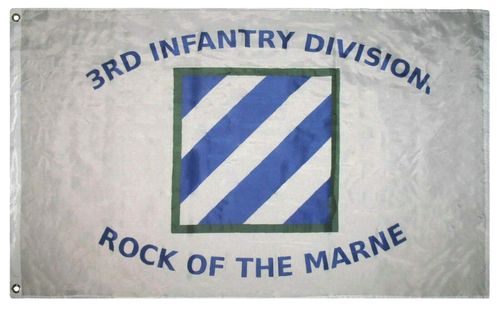
Rock of the Marne
Proud Dog-faced Soldier from June99-Jan04
November 22, 1963: Death of the President
Crowds of excited people lined the streets and waved to the Kennedys. The car turned off Main Street at Dealey Plaza around 12:30 p.m. As it was passing the Texas School Book Depository, gunfire suddenly reverberated in the plaza.
Bullets struck the president's neck and head and he slumped over toward Mrs. Kennedy. The governor was shot in his back.
The car sped off to Parkland Memorial Hospital just a few minutes away. But little could be done for the President. A Catholic priest was summoned to administer the last rites, and at 1:00 p.m. John F. Kennedy was pronounced dead. Though seriously wounded, Governor Connally would recover.
https://www.jfklibrary.org/learn/about-jfk/jfk-in-history/november-22-1963-death-of-the-president
Crowds of excited people lined the streets and waved to the Kennedys. The car turned off Main Street at Dealey Plaza around 12:30 p.m. As it was passing the Texas School Book Depository, gunfire suddenly reverberated in the plaza.
Bullets struck the president's neck and head and he slumped over toward Mrs. Kennedy. The governor was shot in his back.
The car sped off to Parkland Memorial Hospital just a few minutes away. But little could be done for the President. A Catholic priest was summoned to administer the last rites, and at 1:00 p.m. John F. Kennedy was pronounced dead. Though seriously wounded, Governor Connally would recover.
https://www.jfklibrary.org/learn/about-jfk/jfk-in-history/november-22-1963-death-of-the-president
November 23, 1946: French Naval gunfire/bombing in Hai Phong, Viet Nam kills 6,000 civilians, and recklessly starts/triggers the Indo-China War, which eventually led to the Vietnam war.
Quote:
The attack on the main port city of northern Vietnam from 2328 November 1946 was one of the worst massacres in the annals of the French colonial empire. The bloody event should be remembered as a crime against humanity and an example of how army commanders and colonial governors can pull their governments into unwanted wars.
Estimates vary of the number of civilians killed. A French Army spokesperson said there was a maximum of 300 while President H Ch Minh of the Democratic Republic of Vietnam said the casualties numbered 20,000. Most researched historical accounts cite a figure around 6,000.
The conquest of Haiphong was a deliberate provocation by French High Commissioner Georges Thierry d'Argenlieu and his deputy, General Jean Valluy. The pair expected the Vietnamese Army to respond in kind, allowing France to crush the young republic and take control of the whole of French Indochina, the former name of the area that today includes Vietnam, Laos and Cambodia.
On 23 November 1944, British anti-aircraft gunners outside Cortenberg, Belgium, watched in disbelief as a B-17 Flying Fortress drifted down with its landing gear extended toward the muddy fields near their position. With engines stuttering and no landing scheduled, the gunners suspected a dire emergency, perhaps a wounded American crew desperate for help after a bombing raid gone wrong. The massive bomber plowed to a halt, one wingtip digging into the earth as it ground looped and lost a prop, engines finally winding down in the chill.
As moments stretched on in eerie silence, no crew appeared. After nearly twenty suspenseful minutes, Major John Crisp cautiously entered the aircraft, expecting casualties or perhaps men too injured to move. Instead, he found the B-17 utterly deserted: some unopened parachutes, half-eaten chocolate, codebooks open, bombsight uncovered, and fur-lined jackets tossed aside. It was as if the crew had vanished into thin air.
Dubbed the "Phantom Fortress," the plane quickly became the stuff of barracks legend. But the truth was both remarkable and explainable: the B-17, serial 43-38545 of the 91st Bomb Group, had taken heavy flak over Merseburg, Germany, damaging two engines and threatening a catastrophic fuel leak. Realizing they'd never make it back to England, pilot Lt. Harold DeBolt ordered the crew to jettison weight as they limped toward Allied territory. When the remaining engines began to fail near Brussels, DeBolt set the autopilot, lowered the landing gear, and gave the order for everyone to bail out, himself included, at just 800 feet.
The crew landed safely and was recovered alive by friendly troops. Meanwhile, their battered Flying Fortress, on autopilot alone, went on to execute a rough but survivable landing, becoming one of World War II's most mysterious and unforgettable aviation incidents.
Many theories and few answers surrounded the Phantom Fortress. None of them have been fully explained, and the bomber's unmanned landing remains one of the many strange and mysterious things that have been known to occur during warfare.
As moments stretched on in eerie silence, no crew appeared. After nearly twenty suspenseful minutes, Major John Crisp cautiously entered the aircraft, expecting casualties or perhaps men too injured to move. Instead, he found the B-17 utterly deserted: some unopened parachutes, half-eaten chocolate, codebooks open, bombsight uncovered, and fur-lined jackets tossed aside. It was as if the crew had vanished into thin air.
Dubbed the "Phantom Fortress," the plane quickly became the stuff of barracks legend. But the truth was both remarkable and explainable: the B-17, serial 43-38545 of the 91st Bomb Group, had taken heavy flak over Merseburg, Germany, damaging two engines and threatening a catastrophic fuel leak. Realizing they'd never make it back to England, pilot Lt. Harold DeBolt ordered the crew to jettison weight as they limped toward Allied territory. When the remaining engines began to fail near Brussels, DeBolt set the autopilot, lowered the landing gear, and gave the order for everyone to bail out, himself included, at just 800 feet.
The crew landed safely and was recovered alive by friendly troops. Meanwhile, their battered Flying Fortress, on autopilot alone, went on to execute a rough but survivable landing, becoming one of World War II's most mysterious and unforgettable aviation incidents.
Many theories and few answers surrounded the Phantom Fortress. None of them have been fully explained, and the bomber's unmanned landing remains one of the many strange and mysterious things that have been known to occur during warfare.
November 24, 1963

I've heard variations of this story where the B-17 landed back at its home base in England.
One suspects those tales are wild embellishments of this true story
One suspects those tales are wild embellishments of this true story
First Texas Navy created
Quote:
On this day in 1835, the first Texas Navy was established when the General Council authorized the purchase of four schooners and granted letters of marque and reprisal to privateers until the ships were armed. Established to protect the supply line to New Orleans, the navy included the 60-ton Liberty, the 125-ton Independence, the 125-ton Brutus, and the 125-ton Invincible. All four ships were lost by mid-1837, and the Texas Navy virtually ceased to exist until March 1839, when the first ship of the second navy was commissioned. A cruise ending in July 1843 marked the end of the operative career of the Texas Navy, as a truce with Mexico came that summer and the United States undertook to protect Texas until annexation. In June 1846 the ships of the Texas Navy were transferred to the United States Navy. The officers of the Texas Navy desired to be included in the transfer, but seniority-minded United States naval officers opposed the proposal. In 1857 the claims of the surviving Texas Navy officers were settled, and the Texas Navy was no more.
This week marks the 100th Anniverary of the 3rd longest-lived and most popular showcase for country music. WSM radio began broadcasting the Grand Ole Opry live from Nashville, Tennessee on November 28, 1925. The showcase was originally called the Barn Dance, copied after Fort Worth's pioneering 1923 "Hayride Barn Dance" show on WBAP Radio, along with Chicago's WLS radio, who had also copied WBAP with their "National Barn Dance" show that began broadcasting in 1924.
Impressed by the popularity of both the Fort Worth and Chicago Barn Dance shows, producers at WSM radio in Nashville decided to create their own version of the show to cater to southern audiences who could not receive the Fort Worth or Chicago signals. The Grand Ole Opry and both the Fort Worth Hayride Barn Dance and Chicago National Barn Dance aired on Saturday nights and featured folk music, fiddling, and the relatively new genre of country-western "Cowtown" style music. All three shows created a growing audience for a uniquely American style of music and were launching grounds for many of America's most-loved musicians.
Bob Wills & Milton Brown launched their uniquely Texas-born "western swing" on WBAP in 1931, and the singing cowboy Gene Autry got his first big break on the National Barn Dance show in 1933. The WSM producers recognized that many Americans longed for a nostalgic rural past, so all live performers at the Grand Ole Opry were required to dress in hillbilly costumes and adopt old-timey names, while Texas parlayed its Cowboy heritage to create the iconic 1920s singing cowboys and later the 1930s western swing style of hybrid string band jazz.
Impressed by the popularity of both the Fort Worth and Chicago Barn Dance shows, producers at WSM radio in Nashville decided to create their own version of the show to cater to southern audiences who could not receive the Fort Worth or Chicago signals. The Grand Ole Opry and both the Fort Worth Hayride Barn Dance and Chicago National Barn Dance aired on Saturday nights and featured folk music, fiddling, and the relatively new genre of country-western "Cowtown" style music. All three shows created a growing audience for a uniquely American style of music and were launching grounds for many of America's most-loved musicians.
Bob Wills & Milton Brown launched their uniquely Texas-born "western swing" on WBAP in 1931, and the singing cowboy Gene Autry got his first big break on the National Barn Dance show in 1933. The WSM producers recognized that many Americans longed for a nostalgic rural past, so all live performers at the Grand Ole Opry were required to dress in hillbilly costumes and adopt old-timey names, while Texas parlayed its Cowboy heritage to create the iconic 1920s singing cowboys and later the 1930s western swing style of hybrid string band jazz.
In 1942 Enrico Fermi conducts the first man-made nuclear fission chain reaction at the University of Chicago as part of the Manhattan Project.
And Big Bertha becomes a radiated drum so they sell it to the sips.
OklahomaSooner Ag
Newest member of class of 2048 arrived this morning
in Billy Liucci's TexAgs Premium
181
AggieBucksJB
Texas A&M DL Albert Regis declaring for the NFL draft
in Billy Liucci's TexAgs Premium
98
Goose06
Miami (OH) WR Kam Perry Could He Be an A&M Portal Target?
in Billy Liucci's TexAgs Premium
69