
Well, it was a very low bar
Give me a mind-blowing history fact
427,374 Views |
1541 Replies |
Last: 1 min ago by nortex97
No argument there!
For a non-Russian interpretation, what about Sweden? Forgotten history, often, is how this little chapter played out as a prelude.
For a non-Russian interpretation, what about Sweden? Forgotten history, often, is how this little chapter played out as a prelude.
Still on the Swedish throne today, sits the descendants of one of Napoleon's better generals.Quote:
Sweden
The invasion of Aaland and Finland gained extra significance when it triggered a political crisis in Sweden. This would become the key tipping point that led to war. Unsettled by the loss of territory to Russia, Sweden went into turmoil. The monarch was overthrown. Bernadotte, formerly one of Napoleon's marshals, was made Crown Prince of Sweden.
However, what looked at first like a perfect opportunity for Napoleon quickly turned sour. Bernadotte was not a man who would obey without question, and he took his new position very seriously.
Tsar Alexander began making diplomatic overtures to Bernadotte, holding out the hand of Russian friendship. Napoleon's invasion of Swedish Pomerania caused outrage, encroaching on Bernadotte's newly acquired realm. Meanwhile, Alexander offered Sweden the opportunity to act freely against Denmark.
Bernadotte took the bait and committed Sweden to Russia's cause.
An essential part of Europe had been turned against France by the Russians. One of Napoleon's marshals had been turned against him. It was not a situation he could idly let stand.
Again, the history is sort of mind-blowing.Quote:
The previous year, Sweden had been defeated by the Russian Empire and was forced to cede Finland to Russia. As part of the peace agreement, Sweden was also obliged to the Continental System, Emperor Napoleon's economic policy to ban trade between continental Europe and Britain. In June 1809, Swedish army officers overthrew King Gustav IV Adolf in a coup and placed his uncle Charles XIII on the throne, and Sweden switched to a pro-French foreign policy.
In this context, a large party of Swedish nobles favored a Frenchman to succeed their king. Not only was Bernadotte one of Napoleon's marshals, but his wife Desire was Napoleon's sister-in-law, making him part of the extended imperial family. While Bernadotte was flattered by the approach, Napoleon was initially bemused as Bernadotte was out of favor. After some consideration, he saw the advantages of keeping Bernadotte at arm's length and signaled his support for his candidacy. On August 21, the Örebro Diet elected Bernadotte as their crown prince with the name Carl Johan, or Charles John.
Quote:
In the winter of 1806-07, Bernadotte fought in isolated actions against General Bennigsen's Russians but was absent from the major battles at Eylau and Friedland. After a stint as a governor of northern German cities, when Austria renewed hostilities in 1809, Bernadotte was given command of the Saxon Army, designated IX Corps in Napoleon's Grande Arme.
At the climactic Battle of Wagram on July 5-6, Bernadotte's Saxons occupied the French center. A costly frontal assault on the evening of the first day of battle severely dented morale, and the following day, Bernadotte's men, whose white uniforms resembled those of the Austrians, were targeted by friendly fire. Bernadotte ordered his men to fall back from the village of Aderklaa, creating a dangerous gap in the French line, which Napoleon desperately sought to fill. Napoleon stripped Bernadotte of his command on the field and won the battle without him.
More at the link of course. Spoiler alert; Napoleon really blew it.Quote:
In September 1810, as Bernadotte prepared to depart for Stockholm, Napoleon formally released him from his obligations as marshal but advised him to pursue a pro-French policy. When Bernadotte replied that he intended to prioritize Swedish interests, Napoleon belatedly realized that Bernadotte was unwilling to be a French puppet, but by then, it was too late to withhold his consent.
Not long after his arrival in Sweden, Charles John began to take control of the government. He recognized that his adopted country was still lamenting the loss of Finland, but while the prospect of taking Finland back from Russia was remote, he set his eyes on Norway, part of the Danish crown.
Charles John also came to realize that cutting Sweden off from British trade would be disastrous for the Swedish economy, and continued to trade with Britain. When Napoleon responded by sending Marshal Davout to occupy Swedish Pomerania in northern Germany in 1811, Swedish foreign policy began to pivot towards Russia.
Although Napoleon still expected Bernadotte to support his invasion of Russia in 1812, the Crown Prince instead met Tsar Alexander I of Russia and signed a defensive treaty, while Alexander agreed to furnish Russian troops for a future Swedish invasion of Norway. This enabled Alexander to free his corps guarding Finland to strike at Napoleon's northern flank.
Reading, Jimmy Doolittle's Autobiography, "I Could Never Be So Lucky Again".....all sorts of good stories, but here is a good one, Battle of North Africa....when all of the senior staff left London for Gibraltar, Paul W. Tibbets, a Major at the time, was the pilot for General Eisenhower's B-17.....
tibbets had a lot of distinguishing moments:
He flew the lead plane in the first American daylight heavy bomber mission against German-occupied Europe on 17 August 1942, and the first American raid of more than 100 bombers in Europe on 9 October 1942
He flew the lead plane in the first American daylight heavy bomber mission against German-occupied Europe on 17 August 1942, and the first American raid of more than 100 bombers in Europe on 9 October 1942
Dutch Van Kirk (Navigator) and Tom Ferebee (Bombardier) also crewed with Tibbets in Europe on the Red Gremlin and then the Enola Gay.
https://en.wikipedia.org/wiki/Theodore_Van_Kirk
https://en.wikipedia.org/wiki/Thomas_Ferebee
https://en.wikipedia.org/wiki/Theodore_Van_Kirk
https://en.wikipedia.org/wiki/Thomas_Ferebee
Duty, by Bob Greene, about Paul Tibbets. I thought it was a good read
Too intelligent to be a pilot...
From personal experience this is so true.
https://lindagartz.com/world-war-ii-navigator-too-intelligent-to-be-a-pilot/
From personal experience this is so true.
https://lindagartz.com/world-war-ii-navigator-too-intelligent-to-be-a-pilot/

He actually led a fascinating life.
Quote:
Just before Christmas 1915, Lightoller got his own command, the torpedo boat HMTB 117. During his tour with this boat, on 31 July 1916, Lightoller attacked the Zeppelin L31 with the ship's Hotchkiss guns. For his actions, Lightoller was awarded the Distinguished Service Cross, and he was also promoted to commander of the torpedo boat destroyer Falcon.
On 1 April 1918, Lightoller was again off watch, laying in his bunk, when the Falcon collided with the trawler John Fitzgerald. She stayed afloat for a few hours, eventually sinking just about the same time, six years to the day, as the Titanic sank.
Lightoller was now given a new command, the destroyer Garry. On 19 July 1918, they rammed and sank the German submarine UB-110. The ramming damaged the bows of the Garry so severely that she had to steam 100 miles in reverse to relieve the strain on the forward bulkheads as she returned to port for repairs. For this action, Lightoller was awarded a bar to his DSC and promoted to Lieutenant-Commander.
At the end of 1918, Lightoller came out of the Royal Navy as a full Commander. On his return to White Star, he was appointed Chief Officer of the Celtic, having been passed over for a position on the Olympic, the new management wanted to forget the Titanic and all those associated with her. None of the surviving officers from the Titanic ever got their own commands. Lightoller was not interested in remaining Chief Officer of the Celtic indefinitely, so after well over 20 years of service he resigned from White Star Line.
Quote:
In 1929, the Lightollers purchased a discarded Admiralty steam launch, built in 1912 by G. Cooper at Conyer. She was 52 feet long by 12,2 feet wide, powered by a petrol-paraffin Parsons 60 hp. Commander Lightoller had her refitted and lengthened to 58 feet, converting her into a 62 hp Glennifer diesel motor yacht that was christened Sundowner by Sylvia. Throughout the thirties, she was used by the Lightoller family mainly for trips around England and Europe. In July 1939, Lightoller was approached by the Royal Navy and asked to survey the German coastline. This they did under the guise of an elderly couple on vacation in their yacht. When World War II started in September 1939, the Lightollers were raising chickens in Hertfordshire. The Sundowner was kept in a yacht basin at Chiswick.
Then in the closing days of May 1940, after eight months of quiet known as the "phoney war", Britain found itself on the edge of military disasterthe German armies blitzkrieg through Holland, Belgium, Luxembourg and Northern France in just over two weeks. Allied resistance had disintegrated, and almost the entire British Expeditionary Force (BEF) was penned into a tiny pocket on the French-Belgian border.
On 24 May 1940, some 400,000 Allied troops lay pinned against the coast of Flanders near the French port of Dunkirk. German tanks were only ten miles away. Yet the trapped army was saved. In the next 11 days, over 338,000 men were evacuated safely to England in Operation Dynamo, one of the greatest rescues ever.
At 5 p.m. on 31 May 1940, Lightoller got a phone call from the Admiralty asking him to take the Sundowner to Ramsgate, where a Navy crew would take over and sail her to Dunkirk. Lightoller informed them that nobody would take the Sundowner to Dunkirk but him.
On the 1 June 1940, the 66-year-old Lightoller, accompanied by his eldest son Roger and an 18-year-old Sea-Scout named Gerald, took the Sundowner and sailed for Dunkirk and the trapped BEF. Although the Sundowner had never carried more than 21 persons before, they succeeded in carrying a total of 130 men from the beaches of Dunkirk. In addition to the three crew members, two crew members had been rescued from another small boat, the motor cruiser Westerly. There were another three Naval Ratings also rescued from waters off Dunkirk, plus 122 troops taken from the destroyer Worchester. Despite numerous bombing and strafing runs by Luftwaffe aircraft, they all arrived safely back to Ramsgate just about 12 hours after they had departed. It is said that when one of the soldiers heard that the captain had been on the Titanic, he was tempted to jump overboard. However, his mate quickly replied that if Lightoller could survive the Titanic, he could survive anything, and that was all the more reason to stay.
That. Is. Amazing.
Wow, thanks for posting!

I had known that about Lightoller, but thanks for posting. It fills out a lot of details.
Sounds like the inspiration for the characters we saw in Chris Nolan's Dunkirk movie.Quote:
On the 1 June 1940, the 66-year-old Lightoller, accompanied by his eldest son Roger and an 18-year-old Sea-Scout named Gerald, took the Sundowner and sailed for Dunkirk and the trapped BEF.
In the Dunkirk movie, I noticed the main character's yacht had a naval ensign with a blue field, while many others had a red field. Google tells me that they were allowed blue because the captain was in the naval reserve, and red fields were captained by civilians
That's a nice catch that most wouldn't notice.CanyonAg77 said:
In the Dunkirk movie, I noticed the main character's yacht had a naval ensign with a blue field, while many others had a red field. Google tells me that they were allowed blue because the captain was in the naval reserve, and red fields were captained by civilians
He must have hated radio communications of the era.
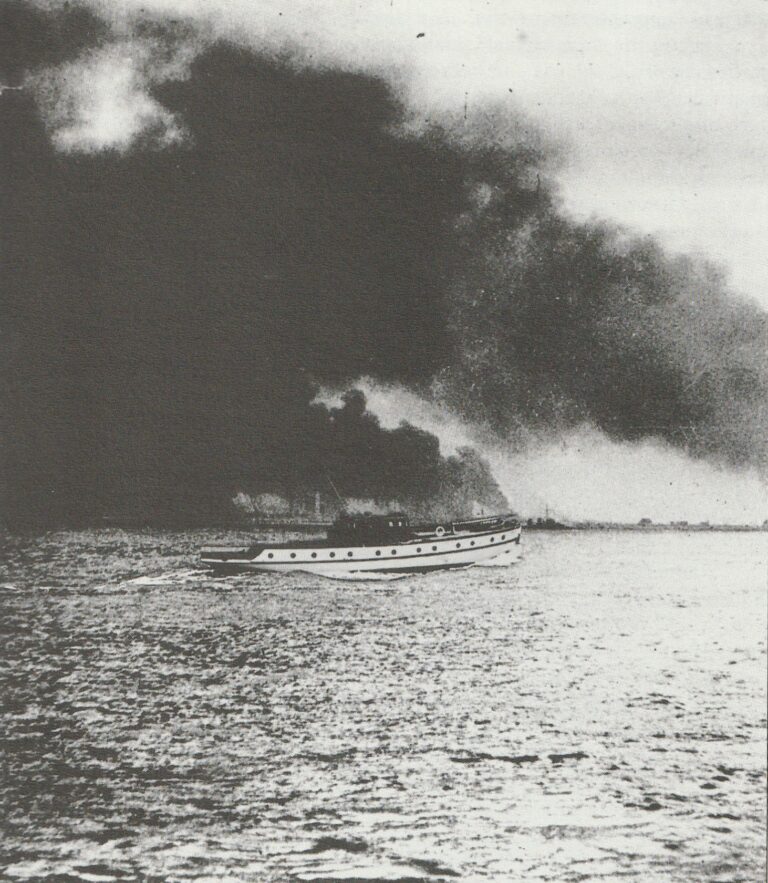
And note that he did turn back the zeppelin from his torpedo boat lure:Quote:
Lightoller's trawler command again did not last long, however, and in the Spring of 1915 he was posted to the Grand Fleet's seaplane carrier HMS Campania as a watch-keeper. Campania was an old coal-burning Cunard liner, fitted with a take-off ramp forward of the bridge, but its maximum speed was only 18 knots.
Lightoller soon found himself in unfamiliar territory, in the rear seat of a Short 184 seaplane acting as observer. It had quickly been demonstrated that Campania's ramp was too short and consequently many pilots on take-off, instead of going skywards, found themselves plunging into the sea.
Therefore, the take-off ramp was abandoned and instead the aircraft were derricked into the sea. This arrangement often caused damage to the fragile aircraft, particularly to their floats, which made them likely to break away on take-off. Therefore, on more than one occasion, Lightoller once again found himself swimming for his life.
Lightoller's moment of glory was almost realised in June 1915 when Campania took part in a major Grand Fleet exercise. The carrier had the role of locating and reporting the position of the 'Red Fleet'. Alas, out of 12 aircraft embarked, only one managed to get into the air but it happened to be Lightoller's. Once airborne, in due course, he spotted the 'enemy' force. Excitedly he unwound the wireless aerial and started transmitting the sighting to the Fleet Commander on his primitive wireless set. His elation was dampened however on his return to Campania, when he learned that his wireless signals had not been received.
Just a remarkable figure. I'm surprised his life isn't more celebrated. His upgraded 'Sundowner' from Dunkirk:Quote:
Torpedo-Boat Command
Lightoller was very pleased to leave Scapa Flow but, in the absence of action against the enemy, he found routine patrolling in the Thames Estuary rather tedious. The tedium was broken by HMTB 117 taking part in trials of the 'tethered goat' scheme. This involved a coastal submarine (B- or C-class) being towed submerged astern of a trawler, with communications between the two vessels maintained by telephone line. The ploy was that the trawler would act as a lure for a U-boat. If the latter took the bait, and surfaced to sink the trawler by gunfire, the tow would be slipped thus allowing the supporting RN submarine the freedom it needed to conduct a torpedo counter-attack. The scheme had some successes in 1915, with two U-boat sinkings, but unsurprisingly it was hazardous for the towed submarine. Lightoller was tasked with trying to perfect the towing arrangement but, after several weeks of unsuccessful trials, the concept was abandoned.
He had his moment of action when one night on patrol in the Thames, his gunfire damaged Zeppelin L31 which had been on its way to bomb London. Due to the damage received, the Zeppelin commander (the distinguished Heinrich Mathy) aborted the raid, and jettisoned his bomb load. L31 was later shot down over Potters Bar, London, in October 1916. In recognition of his success in repelling the raid, Lightoller was awarded the DSC.
Quote:
Lightoller experienced two family tragedies in World War Two. His youngest son, Brian, was killed on the second day of the war when piloting a Bristol Blenheim on a disastrous RAF raid upon shipping in the port of Wilhelmshaven. Roger, who had bravely steered Sundowner in the Dunkirk rescue, as CO of a Motor Torpedo Boat, was killed in March 1945. As a footnote, one of his grandchildren, Captain Tim Lightoller, continued the family maritime heritage in joining the Royal Navy and taking up a career in submarines. His commands included the Porpoise-class diesel submarine HMS Rorqual and the newly commissioned SSN HMS Turbulent.
mind blowing. for sure

Likely responding to the distress of the oiler USS Pecos who had come under attack by the Japanese and sunk , that ship had also been carrying the survivors of USS Langley, many of whom the Edsall had helped rescue days earlier
The old destroyer was instead intercepted by Adm. Nagumo Chuichi's Kido Butai (Striking Force) and fought a hopeless action against an overwhelming force consisting of the battleships Hiei and Kirishima and the heavy cruisers Tone and Chikuma. The Japanese under the command of Vice Adm. Mikawa Gunichi, Commander, 8th Cruiser Division, discovered the lone destroyer and initiated the action against what they believed to be a "Marblehead-type light cruiser."
In the running battle that ensued, Lt. Nix, the destroyer's commanding officer, deployed smoke and skillfully maneuvered his ship, displaying "energy, initiative, and persistence" as he had in carrying out attacks on Japanese submarines.
Although significantly outranged, Edsall's 4-inch guns still returned fire. Nix also launched his limited torpedoes, only narrowly missing Chikuma. The Japanese fired over 1,300 14-inch, 8-inch, and 5-inch shells before calling in an air strike of 26 Aichi Type 99 Kanbakus from the carriers Kaga, Hiry, and Soryu. Before she finally lost all power, Edsall defiantly faced her bow toward the enemy before going down by the stern. Capsizing, she rolled over and slipped beneath the waves around 1900.
In 1946 a mass grave of 34 decapitated POWs was found, including six Edsall survivors. War Crimes trials failed to find those responsible, though other murders around the area did have enough evidence to prosecute. Noone from Edsall survived the war, and there is no record of the American side of the loss, and the US listed her cause of loss as "Disappeared" until after the war (along with Pillsbury and Jarvis, survivors from Houston and Pope cleared their losses up by May 1946).
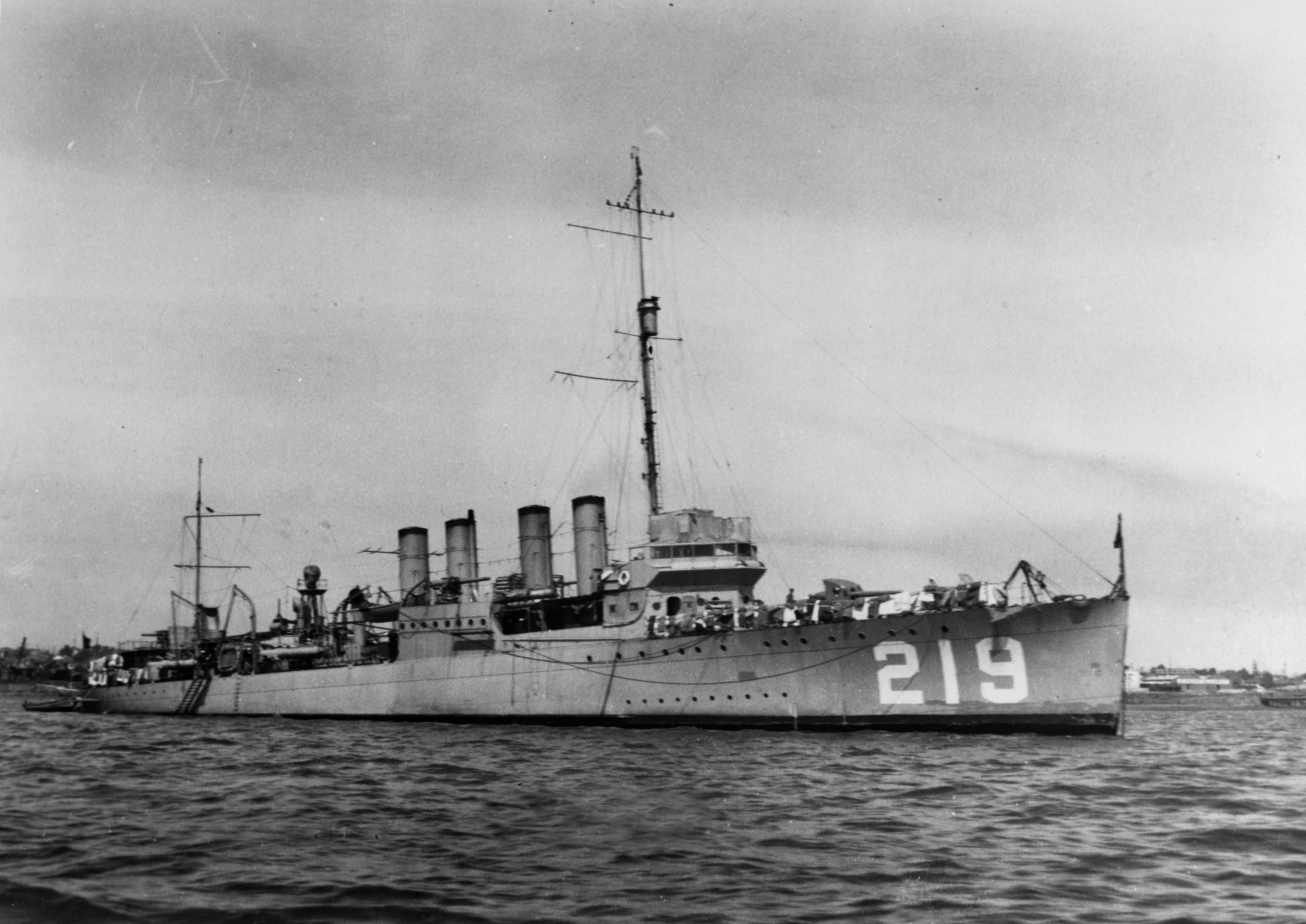
This is an amazing photograph. I'm wondering if that puff ball right in the center might be a part of the Edsall? Appears she is going down, or at least is not level in the water.
The other thing I'm taking away from this post, as a life long nut about WWII aviation, I have never once seen the Aichi Type 99 referred to anything other than the Allied-reporting name for that dive bomber, the Val. Thanks for that new tidbit of information.
The Asiatic Fleet got such a raw deal...
Interesting fact - it will flood your senses
Filling the Grand Canyon… with pee
— Clown World ™ 🤡 (@ClownWorld_) March 13, 2025
pic.twitter.com/UjZQcYA8Dc
I collect ticket stubs! looking for Aggie vs tu stubs - 1926 and below, 1935-1937, 1939-1944, 1946-1948, 1950, 1953, 1956-1957, 1959, 1960, 1963-1966, 1969-1970, 1973, 1974, 1980, 1984, 1990, 2004, 2008 also looking for vs Villanova 1949- all home and away 2012-2013- media or suite passes for bowl games in 2021, 2023 and 2024
The battle of Itter Castle in May 1945 was remarkable in that a Wehrmacht commander teamed up with American army forces to save what would become the senior French VIP's who would largely make post-WW2 decisions for Paris from being killed by the SS in an intense battle. He was the lone casualty of an intense firefight.

Quote:
A highly decorated Wehrmacht officer, Gangl had become opposed to the Nazis and was collaborating with the Austrian resistance.
"Gangl realised he could not protect them [the prisoners], he only had about 20 soldiers who were loyal to him," Mr Harding said.
Taking a big white flag, Gangl met up with the closest American unit, the 23rd Tank Battalion of the US 12th Armoured Division, led by Capt Jack Lee.
Lee offered to lead a rescue mission to the castle.
SS attack
A small group of Americans, accompanied by Gangl and some of his men, made their way to Itter, parking their Sherman tank close to the castle entrance.
At dawn on 5 May, they were attacked by the Waffen SS, who blew up the US tank, but were unable to storm the castle."There was only one casualty," says Mr Harding. "Josef Gangl was killed by a sniper."
Hans Fuchs, who was 14, watched the battle from his family's farm. "There was machine gun fire for hours," he said. "We saw clouds of dust and smoke."
That evening, once the fighting stopped, he went down towards the castle.
"The tank was still burning," he said. "I saw how around 100 SS men were taken prisoner… They had to give up everything and were taken away on lorries."
Here's a cool YouTube video detailing the Itter Castle battle.
There's a sponsorship ad at the beginning, skip to 2:30 or 3:00. It's a solid channel for battles like this.
There's a sponsorship ad at the beginning, skip to 2:30 or 3:00. It's a solid channel for battles like this.
Stalin flew only once during WW2, for the Tehran conference. When making preparations for the travel, he wouldn't fly on a Russian built aircraft, requiring instead a US build C47.
I've always appreciated Rod Serling's The Twilight Zone and Night Gallery. I knew he was a WWII combat veteran with multiple purple hearts and was a prominent anti-war activist.
It turns out that he was stationed and trained at Camp Taccoa (of Band of Brothers fame) in 1943, as a member of the 511th PIR - 11th Infantry.
It turns out that he was stationed and trained at Camp Taccoa (of Band of Brothers fame) in 1943, as a member of the 511th PIR - 11th Infantry.
The Crimean Tatars were the last folks to successfully march to Moscow and take/sack/burn it to the ground, in 1571.
Ivan the terrible barely escaped. The Tatars were brutally repressed then by the Russians/Romanovs and eventually, after the Soviets retook Crimea in WW2 were forcibly moved to Uzbekistan mainly.
More;
1️⃣ Who Were the Crimean Tatars? ☀️🏇
— MindVoyager (@Karol1669024) April 4, 2025
The Crimean Khanate was a powerful Muslim state backed by the Ottoman Empire.
🔸 Founded after the Mongol Golden Horde fragmented
🔸 Skilled in cavalry warfare and lightning-fast raids
🔸 Constantly clashing with Muscovy over tribute and… pic.twitter.com/0KT3lsRsm8
3️⃣ Fire, Panic, and Destruction 🔥😱
— MindVoyager (@Karol1669024) April 4, 2025
The Tatars bypassed Russian fortresses and headed straight for Moscow.
🛡️ Russian forces fled or were crushed
🔥 Once inside, the Tatars set fire to the wooden city
🌪️ The flames turned into a firestorm — a massive inferno
Eyewitnesses said… pic.twitter.com/pgCCROykxW
Ivan the terrible barely escaped. The Tatars were brutally repressed then by the Russians/Romanovs and eventually, after the Soviets retook Crimea in WW2 were forcibly moved to Uzbekistan mainly.
More;
Quote:
It was a great disaster because no one could escape."People fled into stone churches to escape the flames, but the stone churches collapsed (either from the intensity of the fire or the pressure of the crowds.) People also jumped into the Moscow River to escape, where many drowned. The powder magazine of the Kremlin exploded and those hiding in the cellar there asphyxiated. The tsar ordered the dead found on the streets to be thrown into the river, which overflowed its banks and flooded parts of the town. Jerome Horsey wrote that it took more than a year to clear away all the bodies.
Napoleon took it and got the Russians to sack and burn it for him. Swedes also took and held it for two months in 1610 ( no sacking or burning) but their invasion ended as disastrously as most other invasions of Russia.
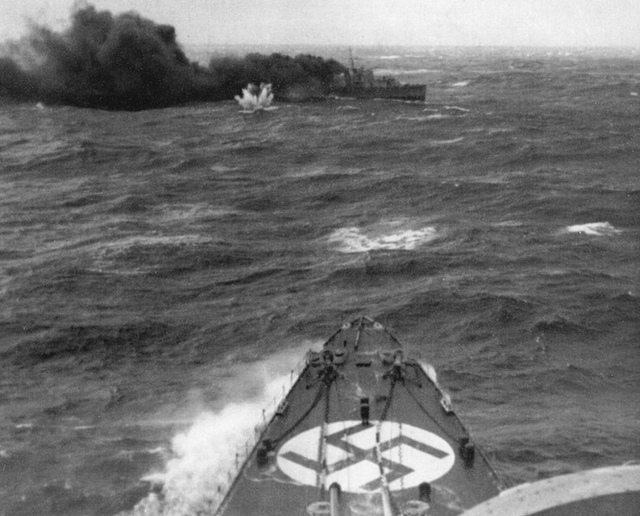
HMS Glowworm crosses the bow of German Heavy Cruiser Admiral Hipper, moments before Glowworm turned and rammed Hipper, April 8, 1940

On the morning of April 8, 1940, while still detached from its flotilla, Glowworm encountered the German destroyer Z11 Bernd von Arnim. This encounter marked the beginning of a dramatic sequence of events that would ultimately lead to the sinking of HMS Glowworm.
Despite being outnumbered and outgunned, Glowworm engaged the German destroyer in a fierce battle. The crew, well-trained and resolute, fought with determination. The clash between the two destroyers, though intense, was a prelude to an even more significant development.
The situation escalated when the German heavy cruiser Admiral Hipper, commanded by Captain Hellmuth Heye, arrived on the scene. The Admiral Hipper was a significantly larger and more powerful vessel than both Glowworm and the German destroyer it was initially engaged with.
Facing overwhelming odds, Glowworm continued to fight valiantly. Lieutenant Commander Roope, recognizing the dire situation, made a critical decision to attempt a torpedo attack on the formidable Admiral Hipper. This daring maneuver showcased not only the courage of the crew but also their commitment to engaging the enemy, even in the face of almost certain destruction.
The torpedo attack, while unsuccessful, led to a desperate move by Glowworm. In a final act of bravery, Lieutenant Commander Roope decided to ram the much larger Admiral Hipper. This unexpected and audacious move caught the German crew off guard and resulted in significant damage to the Admiral Hipper.
However, the impact proved fatal for HMS Glowworm. The force of the collision, combined with the damage sustained during the intense battle, led to the eventual breaking apart and sinking of the British destroyer. The crew faced the harsh reality of abandoning ship in the icy waters of the Norwegian Sea.
One of the remarkable aspects of the aftermath was the recognition of the bravery displayed by Lieutenant Commander Gerard Broadmead Roope and the crew of Glowworm by the enemy. Captain Hellmuth Heye of the German cruiser Admiral Hipper, the very ship that Glowworm had engaged in battle, was so impressed by the audacious actions of Roope and his crew that he recommended Roope for a gallantry award.
RGV AG said:
My paternal grandfather was born in France and was about 7 or 8 years old when WWI broke out. About 2 years before the end of the war he immigrated with my Great Grandmother to Brazil and a few years later to Mexico. His father was direly wounded in the war and died a few years after the armistice was signed from wounds. Both sides of his family had several male members killed or maimed.
In talking to him when I was older he relayed that he believed it a foregone conclusion that France would really not fight WWII as the will of the populace in general was very much against another all out war. France never released the precise casualty figures to WWI. I have read that some historians estimate that between military dead and wounded and civilian deaths and wounded/affected from war caused issues; i.e. starvation, disease, sickness, and military action at up to almost 27% of the population. My grandfather relayed that it was just devastating to many families, including his own.
One of my senior history seminars I remember understanding that that based on estimated casualties, the population in general, and demographics of France at that time that out of every 100 working age males 15 had been killed and another 60 wounded, most fairly severely given the medical treatments of the time. French casualties in the first 2 years of the war were very high.
My great grandmother refused to ever return to France, although my grandfather did several times but refused to live there ever again. Again, in speaking to him later in life he believed that Germany, like France, would never rise to be a military power again, not because of imposed limitations but because of the after effects of such a harsh defeat and the impact of deaths on a more modern and sensitive society. My grandfather and my great grandmother despised the Germans and Germany.
I remember my favorite prof, Dr. Beaumont, saying during one class lecture that statistically, every family in France suffered a death at Verdun. Having seen it, I believe it.
Not just any medal but the German captain recommended him for the Victoria Cross.
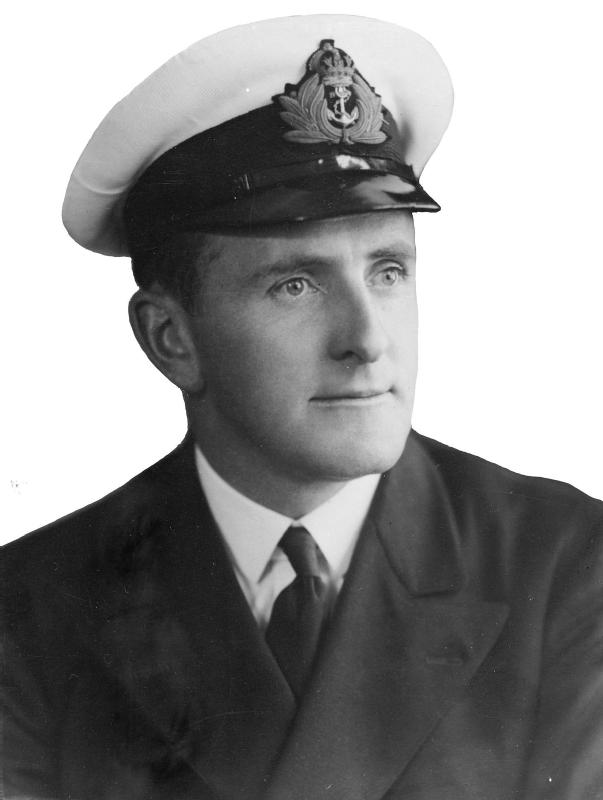
Was Roope a hero (he was awarded a VC posthumously after the war) or a fool? His attack by ramming on the cruiser cost not only his own life, but also the lives of most of his crew.
Depends on the situation
Were the defenders of the Alamo heroes or fools who got themselves trapped?
You decide.
Were the defenders of the Alamo heroes or fools who got themselves trapped?
You decide.
KingofHazor said:
Was Roope a hero (he was awarded a VC posthumously after the war) or a fool? His attack by ramming on the cruiser cost not only his own life, but also the lives of most of his crew.
It was just prior to the Battle of Britain when the nation was fighting for its life and utterly dependent on open Atlantic channels. The man did his duty to the end and should be honored for that.
I wonder if his crew agreed with his decision and if they were honored for the sacrifice of their lives in any way?
I'm not calling Roope a fool by any means. Rather, sometimes decisions like his can be truly heroic. Other times, simply suicidal with nothing gained. It's hard to tell from the brief bits written about the event.
I'm not calling Roope a fool by any means. Rather, sometimes decisions like his can be truly heroic. Other times, simply suicidal with nothing gained. It's hard to tell from the brief bits written about the event.
Desperate times call for desperate measures and sometimes people get killed.
Puts me in mind of another desperate situation, hero versus fool situation and a semi-mind-blowing history fact. The very sinkable Thomas Selfridge during the Civil War is the man. He was in command of USS Cumberland in Hampton Roads the day CSS Virginia came out to play. Cumberland would be the first ship sunk by an ironclad in combat. Selfridge refused to strike his colors as his ship was sinking from Virginia's gunfire and Selfridge kept on firing his guns, watching most of the projectiles bounce off the casemate of the ironclad. He did order his men to fire at the portholes, hoping for a lucky strike but sailors died because of his decision to go down fighting.
Selfridge was next given command of the USS Alligator, where he did sea trials on the Federal version of the Hunley. Of course, in this case he was trying to sink his ship, as it was a submarine. After testing the submarine, he was given command of the tinclad gunboat USS Cairo on the western waters. Of course, Cairo with Selfridge in command became the first naval vessel sunk by an electronically detonated mine (called a torpedo in those days). His next command was the timberclad USS Manitou. Did he lose her? Of course he did, when he collided with the former CSS General Price (captured at Memphis) at the beginning of the Red River Campaign in April 1864.
Despite this bad luck he was immediately given command of the USS Osage, a Neosho class monitor and during the fighting on Red River at Blair's Landing his ship became the first to fire a cannon aimed by a telescopic sight. This first shot took off the top of the head off the famous Texan, Tom Green. Selfridge did not sink the Osage but he did ground it on a sandbar in the Arkansas River, splitting the hull. Fortunately, it was salvaged and repaired.
With the end of the war the navy got Selfridge off the water and behind a desk at the US Naval Academy. With everyone calling him the best swimmer in the US Navy. Less friendly people gave him the more familiar moniker of Jonah.
But that was not the end of the hard luck of the Selfridge family. His son and namesake became an admiral but was court martialed for killing Japanese fishermen when he decided to have target practice 3 miles off the coast of Japan, without first inspecting the impact zone. His son, and namesake, realizing the navy life had not always been good to the Selfridge's joined the army. He became the first person to die in a plane crash, while flying with Orville Wright in 1908. Selfridge Air National Guard Base is named for him. I saw the propeller from the plane he was flying in when he died. It is at the Air Force National Museum at Wright Patterson AFB.
Puts me in mind of another desperate situation, hero versus fool situation and a semi-mind-blowing history fact. The very sinkable Thomas Selfridge during the Civil War is the man. He was in command of USS Cumberland in Hampton Roads the day CSS Virginia came out to play. Cumberland would be the first ship sunk by an ironclad in combat. Selfridge refused to strike his colors as his ship was sinking from Virginia's gunfire and Selfridge kept on firing his guns, watching most of the projectiles bounce off the casemate of the ironclad. He did order his men to fire at the portholes, hoping for a lucky strike but sailors died because of his decision to go down fighting.
Selfridge was next given command of the USS Alligator, where he did sea trials on the Federal version of the Hunley. Of course, in this case he was trying to sink his ship, as it was a submarine. After testing the submarine, he was given command of the tinclad gunboat USS Cairo on the western waters. Of course, Cairo with Selfridge in command became the first naval vessel sunk by an electronically detonated mine (called a torpedo in those days). His next command was the timberclad USS Manitou. Did he lose her? Of course he did, when he collided with the former CSS General Price (captured at Memphis) at the beginning of the Red River Campaign in April 1864.
Despite this bad luck he was immediately given command of the USS Osage, a Neosho class monitor and during the fighting on Red River at Blair's Landing his ship became the first to fire a cannon aimed by a telescopic sight. This first shot took off the top of the head off the famous Texan, Tom Green. Selfridge did not sink the Osage but he did ground it on a sandbar in the Arkansas River, splitting the hull. Fortunately, it was salvaged and repaired.
With the end of the war the navy got Selfridge off the water and behind a desk at the US Naval Academy. With everyone calling him the best swimmer in the US Navy. Less friendly people gave him the more familiar moniker of Jonah.
But that was not the end of the hard luck of the Selfridge family. His son and namesake became an admiral but was court martialed for killing Japanese fishermen when he decided to have target practice 3 miles off the coast of Japan, without first inspecting the impact zone. His son, and namesake, realizing the navy life had not always been good to the Selfridge's joined the army. He became the first person to die in a plane crash, while flying with Orville Wright in 1908. Selfridge Air National Guard Base is named for him. I saw the propeller from the plane he was flying in when he died. It is at the Air Force National Museum at Wright Patterson AFB.
Thanks for posting that. It was humorous. Interesting to me because I've been to Selfridge ANGB a couple of times. I knew a little bit about its namesake, but not his entire "notorious" family history.
Featured Stories
See All
Texas A&M tabbed as No. 12 national seed
by Richard Zane
CFP expansion figures to dominate discussion at SEC Spring Meetings
by Olin Buchanan
4:46
16h ago
6.5k
Rapid Reaction: An intriguing regional field headed to Blue Bell
by Ryan Brauninger
5:30
18h ago
3.4k
8:54
16h ago
3.8k